Do you like what you see - hit a TIP JAR button below
Designing a Side Table with a Push‑to‑Open Drawer
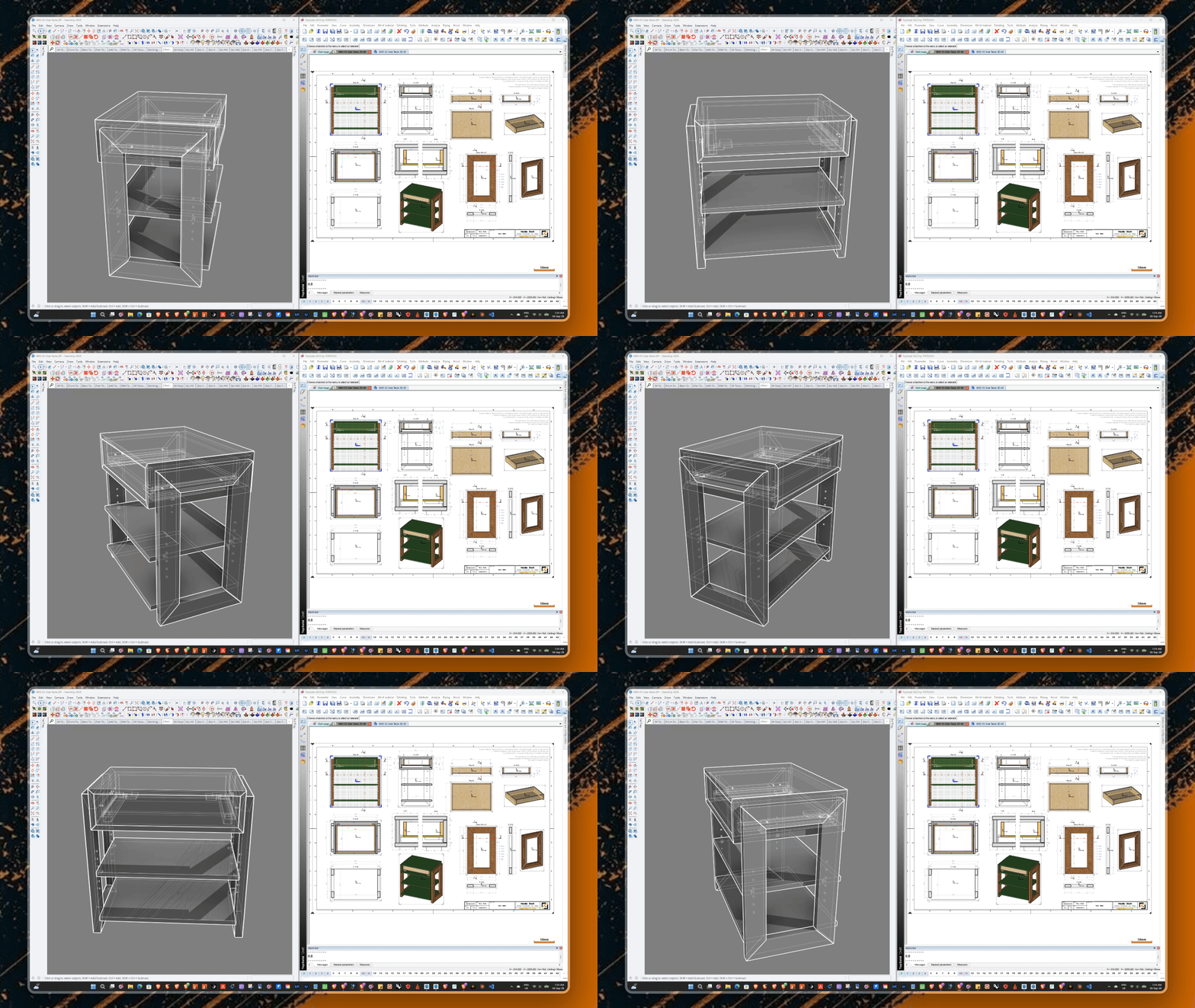
This side table (project 0003‑ES) was built for the Etsy shop, and it's a good example of how a few honest design choices can carry a small piece. The case is a simple green box — one drawer up top, a fixed shelf, and an adjustable shelf below — held inside a mitred solid‑wood frame that does double duty as the legs.
The frame
Instead of separate legs and aprons, the front and back are each one mitred frame, roughly 575 mm tall and 400 mm wide, with the corners cut at 45° rather than joined square. It's a detail that reads as more considered than a standard leg-and-rail build, and it lets the case sit inside the frame rather than on top of it, so the wood grain wraps the piece rather than interrupting it.
The case
The case itself is 540 mm wide and 600 mm tall, in 18 mm panel stock — most likely a painted ply or MDF given the flat green finish. The drawer sits at the top, running on a set of concealed slides let into the sides, with a push‑to-open catch so there's no visible pull breaking up the drawer front. Below it, two shelves: the top one fixed, the lower one adjustable, riding on a row of shelf‑pin holes spaced 32 mm apart down each side panel. Small detail, but it's the kind of thing that makes a piece feel finished rather than just built.
The drawer
The drawer box itself is straightforward — a plywood box, bottom let into a groove, sized to leave clearance front and back for the push‑to‑open mechanism and slides. Nothing fancy in the joinery here; the interest in this piece is all in the frame and the shelf detailing, not the drawer construction.
Modeling notes
This one was modeled in TopSolid Wood the way most of these builds are — the frame as a parametric assembly so the mitre angles and rail widths update automatically if the overall height or depth changes, and the case as a standard cabinet body with the shelf‑pin pattern generated rather than hand‑placed. That's really the advantage of working parametrically for a shop that's producing pieces for an Etsy store: if a customer wants this table 50 mm taller or a touch deeper, it's a dimension change, not a redraw.
As always — these drawings show the design intent, not a joinery instruction manual. Anyone building this should think through their own joints and hardware based on their tools and the wood they're using.
Go to ETSY Store to get this product