Do you like what you see - hit a TIP JAR button below
A Two-Drawer Side Table with Sculpted Oak Legs
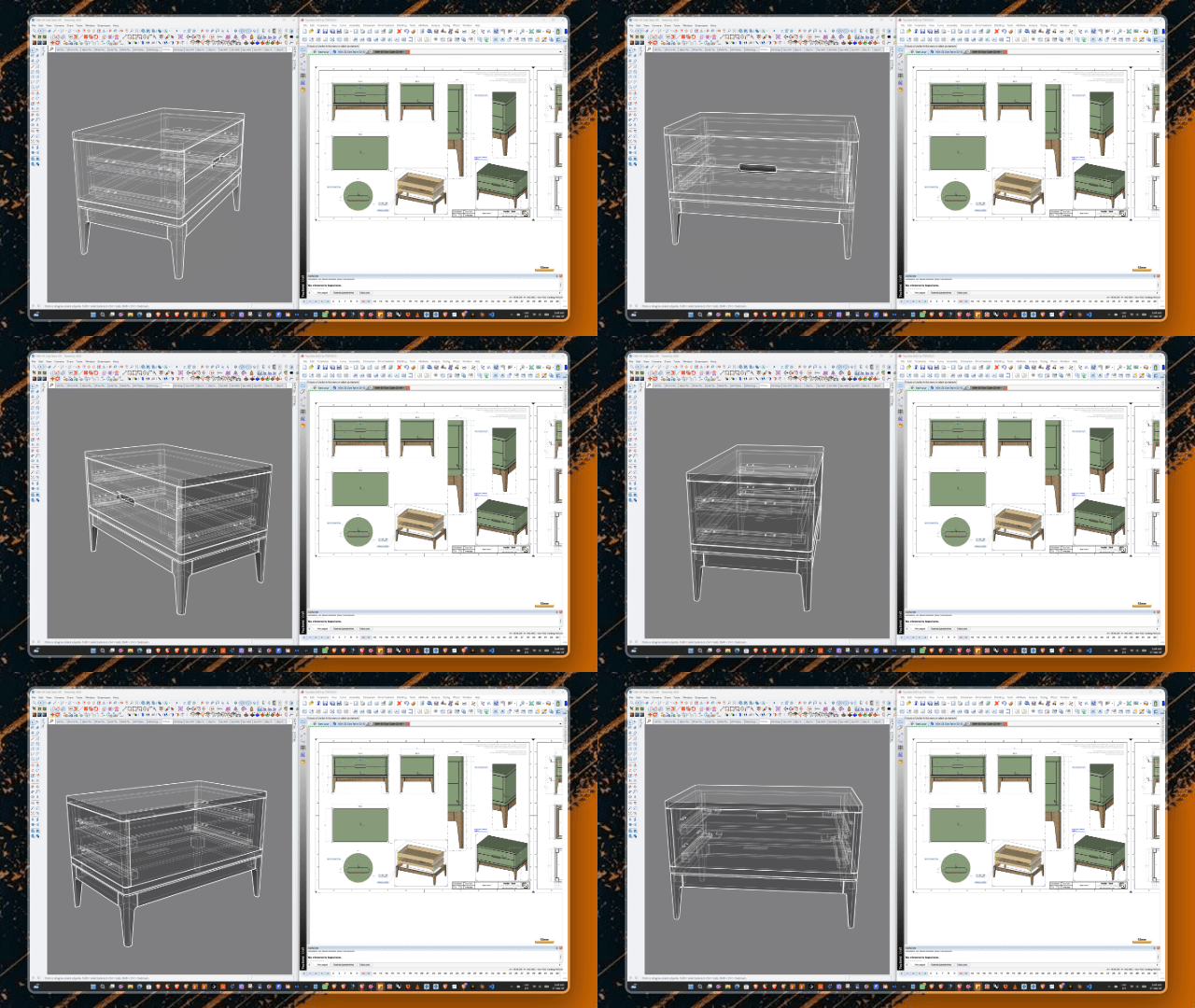
This side table (project 0004‑ES) takes a different approach from the last one: instead of the case sitting inside a frame, here it floats above a delicate oak leg frame, joined with mitred corners and a neat curved taper on each leg. It's a piece that leans a bit more toward the softer, contemporary end of the spectrum.
The case
At 750 mm wide, 450 mm deep, and 500 mm tall, the cabinet is built from spray‑painted MR MDF in a muted sage green. Two full‑width drawers are separated by a 3×3 mm shadow gap rather than a visible face frame or reveal — a small detail, but it's what gives the drawer fronts their crisp, floating look rather than butting straight against each other.
The handles
Instead of applied hardware, each drawer front has a cut‑out handle machined directly into the panel: a 150 mm long, rounded‑end slot with a 10 mm radius. It keeps the front completely flush and uninterrupted, which suits the minimal look of the piece a lot better than a knob or bar pull would.
The legs
The leg frame is solid oak, mitred at the corners with the same shadow‑gap detail carried through from the case above. Each leg is shaped rather than left square — a gentle curved taper down to the foot, cut from a wider blank so the profile has some visual weight up top and lightens as it goes down. It's the kind of leg that takes more setup on the bandsaw or CNC than a straight taper, but it changes the whole character of the piece.
The drawers
Drawer boxes are birch plywood, straightforward construction, with the front panel intentionally shifted down 25 mm relative to the box sides — a small offset that lines the drawer face up correctly with the shadow gap and case opening once everything is assembled.
Modeling notes
Modeled parametrically in TopSolid Wood, same as always — which made a piece like this genuinely useful to build digitally rather than just draw. The tapered leg profile, the shadow gap spacing, and the drawer front offset are all things you want dialed in and checked before a single board gets cut, and having them as parameters means the whole leg frame or case can be resized without redoing the geometry from scratch.
As always — these drawings show the design intent, not a joinery manual. Anyone building this should think through their own joinery and hardware based on their tools and materials.
Go to ETSY Store to get this product